
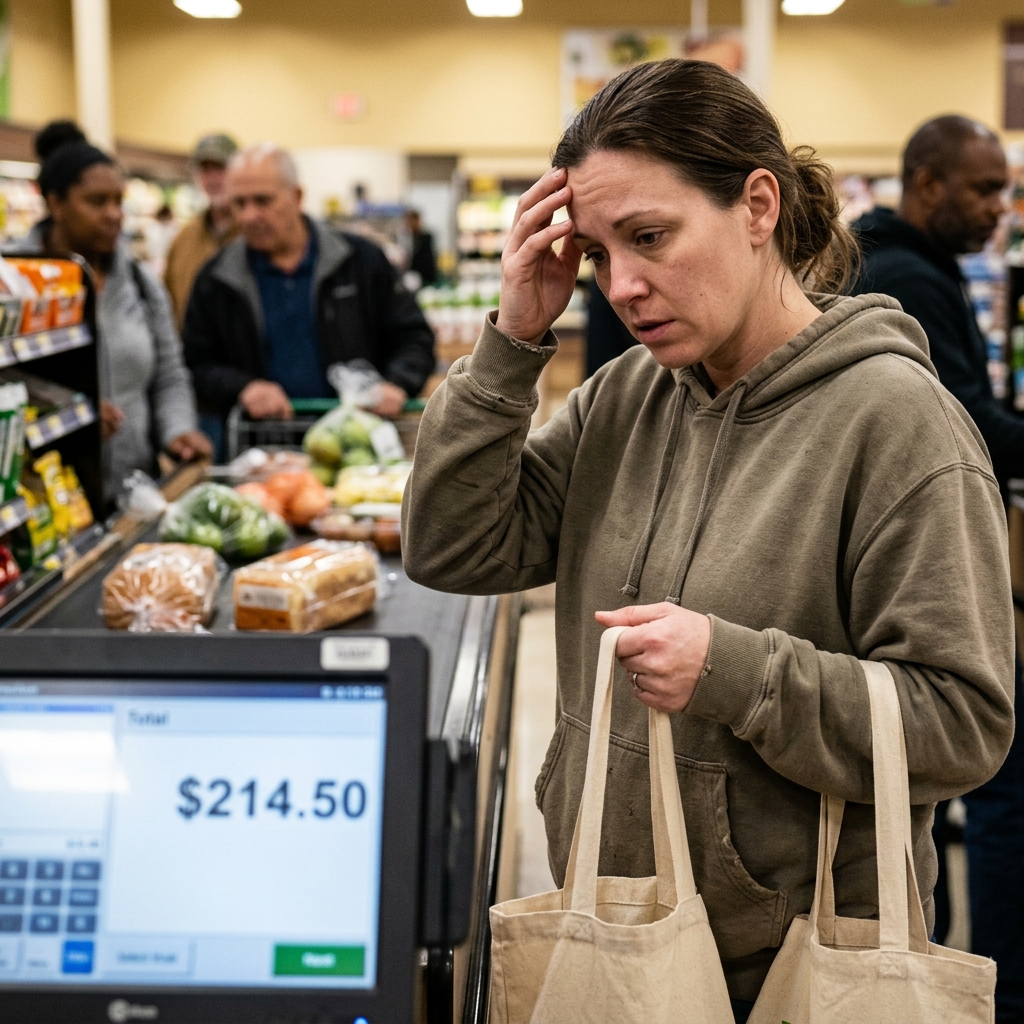
The political environment preceding the upcoming congressional races is defined by extreme volatility, institutional distrust, and severe economic anxiety. Understanding the core 2026 midterm election issues is absolutely essential for forecasting the future balance of legislative power in the United States. Currently, the Republican Party maintains a fragile advantage in the House of Representatives and a narrow 53-47 majority in the Senate.1 However, the incumbent president's party historically faces severe electoral headwinds during midterm cycles. Between 1934 and 2018, the party occupying the White House lost an average of 28 House seats and four Senate seats during the midterms.2
In 2026, these historical precedents are compounding with acute, unprecedented contemporary crises. The electorate is navigating a prolonged cost of living crisis, the geopolitical shockwaves of an escalating conflict with Iran, and the highly polarized rollout of federal immigration enforcement operations.3 Consequently, public sentiment has soured dramatically on the current administration. An overwhelming 72% of Americans currently believe the country is headed in the wrong direction.3
Furthermore, President Donald Trump's approval ratings have slipped dangerously low as the election approaches. Major polls conducted by Reuters-Ipsos, Strength in Numbers-Verasight, and AP-NORC indicate his overall approval is hovering in the mid-30s, specifically between 33% and 36%.3 An NBC News decision desk poll similarly found his personal approval rating sitting at a second-term low of 37%, with 63% of adults explicitly disapproving of his performance.3 Even within his own party, there are signs of fracturing. While 83% of Republicans still offer a positive approval rating, this represents a four-point drop from earlier in the year.3
These shifting sentiments underscore the complexity of the 2026 midterm election issues. Voters are increasingly skeptical of federal competence, deeply concerned about inflation, and motivated by profound ideological divisions over reproductive rights, technological infrastructure, and democratic integrity.6 This comprehensive report explores the fundamental policies, economic debates, geopolitical conflicts, and demographic trends that will ultimately drive voter turnout and shape the trajectory of the American republic.
Economic Anxiety, Inflation, and the Cost of Living Crisis
The economy remains the absolute top priority for the American electorate heading into the November elections. Despite sweeping legislative changes and ambitious macroeconomic interventions by the administration, the daily reality for most citizens is defined by financial strain. Understanding this disconnect is vital for analyzing the primary 2026 midterm election issues.
The Macroeconomic Impact of the One Big Beautiful Bill Act
In July 2025, the administration achieved a major legislative victory with the passage of the One Big Beautiful Bill Act (OBBBA).9 This sweeping legislation was designed to make the individual and corporate tax cuts established in the 2017 Tax Cuts and Jobs Act (TCJA) permanent.9 The OBBBA introduced profound business-friendly provisions aimed at stimulating domestic manufacturing. It potentially reduced the effective corporate tax rate to a historic low of 12% while reinstating 100% bonus depreciation and the immediate deduction of domestic research and development expenses.9
For individual taxpayers, the administration championed the OBBBA as a massive relief package. The legislation eliminated federal income taxes on tips and overtime pay, while simultaneously raising the state and local tax (SALT) deduction cap from $10,000 to $40,000 for households earning under $500,000.9 Financial analysts forecast that these combined tax cuts will provide approximately $160 billion in consumer deductions and credits during the 2026 tax year.9 Consequently, total tax refunds are projected to increase by a staggering 44% year-over-year.9
However, the long-term fiscal consequences of the OBBBA have ignited intense partisan debate. To facilitate these tax cuts, the legislation authorized a $5 trillion increase in the United States debt limit.9 Furthermore, it is projected to increase government spending by $3.8 trillion over the next decade, adding up to $4 trillion to the national deficit when accounting for interest.9 By the end of 2026, the deficit-to-GDP ratio is projected to exceed 7%, a figure more than double the historical average recorded prior to the 2008 financial crisis.9 To offset these massive costs, the bill included controversial, back-loaded spending cuts to Medicaid and food assistance programs utilized by low-income families.9
The Squeeze on Household Budgets and Consumer Pessimism
Despite the administration's narrative of macroeconomic stimulation, the microeconomic reality for the average consumer remains grim. A significant 61% of Americans explicitly state that the economy is not working well for them personally, an increase from 57% in May of the previous year.10 This dissatisfaction stems directly from the structural cost of living, which has significantly outpaced nominal wage growth.
Since the onset of the global pandemic, average hourly wages have risen by approximately 30.8%.11 However, the costs for the core elements of a standard household budget have risen exponentially faster. Health care costs provide a stark example of this disparity. Between 1999 and 2024, health care rose from 13% to 18% as a share of the national GDP.11 During this same period, workers' contributions to family health insurance premiums surged by 308%, nearly three times the pace of actual wage growth.11 More recently, out-of-pocket medical expenses per person rose by nearly one-third in just a five-year span, jumping from $1,239 to $1,652.11
| Economic Indicator | Voter Sentiment and Polling Data (2026) |
| Top Administrative Priority | 57% of Americans cite "Lowering Prices" as the top necessary priority.12 |
| Current Economic Rating | 70% of the electorate describes the current economy as "poor".3 |
| Cost of Living Approval | Only 23% approve of the administration's handling of the cost of living; 76% disapprove.3 |
| Partisan Blame Assessment | 50% blame Trump/Republicans for their economic anxiety; 41% blame Biden/Democrats.13 |
| Personal Finance Outlook | 39% expect their finances to remain stagnant in 2026; 29% expect them to worsen.10 |
The housing market also remains a point of severe, unyielding strain. The administration attempted to intervene by announcing a $200 billion buy program through Government-Sponsored Enterprises (GSEs) like Fannie Mae and Freddie Mac.9 This program aimed to purchase mortgages and inject liquidity into the market.9 While this initiative successfully tightened mortgage spreads and brought headline rates just below 6% for the first time since 2022, analysts argue the broader impact remains negligible.9 Market forecasts for 2026 predict only a modest 2% growth in home prices, meaning affordability challenges will persist as a major vulnerability for incumbent politicians.9
Geopolitical Escalation: The Domestic Fallout of the Iran Conflict
Foreign policy rarely dictates the outcome of midterm elections, which are traditionally dominated by domestic concerns. However, the rapid escalation of the United States' conflict with Iran has fundamentally altered global energy markets, creating a direct intersection between geopolitics and the domestic cost of living. This conflict is heavily influencing the 2026 midterm election issues by eroding the administration's claims of global stability.
Operation Epic Fury and the Collapse of Diplomatic Negotiations
In early 2026, the United States military launched "Operation Epic Fury," an expansive campaign targeting Iranian strategic assets.14 While defense officials report that tactical objectives have largely been achieved, the broader strategic aims remain dangerously unmet.14 The conflict has increasingly diverged from the administration's original goals, resulting in a protracted, highly destabilizing regional standoff that is reshaping Middle Eastern partnerships.14
Attempts to resolve the crisis diplomatically have ended in failure. A high-stakes, 21-hour session between U.S. delegates, led by Vice President JD Vance, and Iranian delegates, led by parliamentary speaker Mohammad Bagher Ghalibaf, collapsed without any tangible progress.4 The negotiations exposed unbridgeable gaps regarding the future of the Strait of Hormuz and Tehran's support for militant movements.4 Specifically, the talks disintegrated after Iran firmly refused United States demands to end its nuclear enrichment program and hand over 440 kilograms of highly enriched uranium.4
In response to the diplomatic collapse, President Trump announced an indefinite extension of military operations.4 Furthermore, he ordered the U.S. naval fleet assembled in the region to implement a strict blockade, aiming to exert maximum economic pressure on an Iranian regime heavily dependent on oil sales.4
The Strait of Hormuz and the Surge in Domestic Energy Prices
The Iranian response to the American blockade has been swift and economically devastating. Iran's Islamic Revolutionary Guard Corps (IRGC) maintained a reciprocal blockade on the Strait of Hormuz, declaring it a definitive strategy to maintain a deterrent shadow over American allies.4 This strategic waterway is vital to global commerce, normally carrying approximately a fifth of the world's total oil and liquid natural gas supplies.4
The IRGC intends to force each passing tanker to pay a $2 million toll, effectively strangling global energy logistics and driving up shipping costs exponentially.4 The downstream effects on the American consumer have been immediate and severe. By April 2026, average pump prices in the United States pushed above $4 a gallon for the first time since 2022.15
This surge in domestic gas prices directly undermines the administration's central narrative of economic recovery and stability. Midterm elections are fundamentally driven by anger management and the realization of failed expectations.15 A significant portion of the conservative base supported the Republican ticket in 2024 specifically expecting an "America First" strategy focused on domestic prosperity.15 Instead, they are bearing the financial burden of an escalating overseas conflict that is directly inflating the cost of basic commodities.15
Polling reflects a sharp, undeniable public backlash against these foreign entanglements. A staggering 67% of Americans disapprove of the administration's handling of the war with Iran, compared to just 33% who approve.3 Furthermore, a solid majority of 61% believe the United States should completely avoid taking any further military action in the region.3 Consequently, the administration's aggressive geopolitical posture has become a severe electoral liability, alienating independent voters and fracturing the enthusiasm of the core Republican base just months before the election.
Federal Enforcement and Controversy: The Impact of Immigration Policies
Immigration enforcement has served as the foundational cornerstone of the second Trump administration's policy platform. However, the aggressive, uncompromising implementation of these policies has generated unprecedented national controversy. This aggressive approach has transformed immigration from a reliable base-mobilizing asset into one of the most polarizing 2026 midterm election issues.
The $170 Billion Enforcement Package and Budget Disparities
To fulfill its campaign promises, the Republican-led Congress approved a historic $170 billion immigration enforcement package in 2025.17 This colossal funding mechanism is larger than the combined annual policing budgets of all 50 states.17 It facilitated a massive expansion of federal capabilities, nearly tripling the budget for Immigration and Customs Enforcement (ICE) to $28.7 billion for the 2025-2026 fiscal cycle.18 Consequently, the number of active ICE officers and agents more than doubled, surging from roughly 10,000 to 22,000 personnel.18
However, the structural allocation of these funds has crippled the administrative side of the immigration system. Less than 8% of the $170 billion package was appropriated for immigration courts.17 This severe underfunding has created a catastrophic bottleneck, resulting in nearly 3.4 million cases pending before immigration judges across the nation.17
This systemic disparity has led to dangerous overcrowding within federal holding facilities. ICE detention numbers surged to approximately 68,000 individuals by February 2026, representing a 75% increase since the administration took office.17 Alarmingly, human rights organizations report that conditions within these facilities have rapidly deteriorated. Thirty-two individuals died in ICE custody in 2025—a two-decade high—and at least seven more died in January 2026 alone.17 Environmental watchdogs have also raised severe concerns regarding facility locations. For instance, ICE planned a family detention center at the England Airpark in Louisiana, a former military base where groundwater tests revealed toxic "forever chemicals" (PFAS) at levels 575,000 times higher than federal safety limits.19
Operation Metro Surge and the Minnesota Crisis
The theoretical, partisan debates over immigration policy materialized into a visceral national crisis during "Operation Metro Surge." Launched in December 2025, this large-scale enforcement operation deployed thousands of federal agents from DHS, ICE, and Customs and Border Protection (CBP) directly into the Minneapolis–St. Paul metropolitan area.2 Federal officials initially framed the mission as a targeted effort against violent offenders and those with existing deportation orders.2
However, the operation rapidly expanded into indiscriminate, large-scale community raids, sparking intense conflict with local authorities.2 Minneapolis Mayor Jacob Frey issued executive orders restricting ICE's use of city facilities, while the state government filed a federal lawsuit demanding an end to the operation.2 Tensions culminated in catastrophic violence when two United States citizens were fatally shot by federal agents in separate incidents in January 2026.2
The victims, Renee Nicole Macklin Good and Alex Jeffrey Pretti, were initially labeled by administration officials as violent actors attempting to harm officers.2 However, subsequent video evidence and widespread eyewitness accounts completely contradicted these official narratives, revealing that the victims posed no immediate threat.2 These fatalities triggered massive, localized unrest, drawing an estimated 50,000 people to a general strike and forcing Governor Tim Walz to mobilize the state National Guard.2
The Electoral Repercussions of Federal Overreach
The political fallout from Operation Metro Surge has permanently altered the electoral calculus for the 2026 midterms, transforming the Midwest into a battleground of federal resistance. Public opinion on the administration's immigration strategy has inverted entirely. While the president's policies enjoyed 50% approval shortly after his inauguration, that number has plummeted to just 40%.3 Currently, 60% of all Americans explicitly disapprove of his overarching approach to immigration.17
The electoral penalties for supporting these aggressive deportations are severe. Recent polling reveals that 52% of Americans are less likely to support any midterm candidate who backs the administration's deportation approach.3 This metric is particularly devastating among independent, non-aligned voters, where 57% state they prefer a candidate who actively opposes these deportations.3
In Minnesota specifically, the operational overreach has alienated moderate suburban voters and provided a massive boost to Democratic candidates. Democratic analysts predict that the backlash against Operation Metro Surge will buoy down-ballot candidates, potentially leading to another progressive trifecta in the state legislature.20 The issue has completely eclipsed previous Republican talking points regarding state-level fraud, forcing the GOP onto the defensive in highly contested races, such as the U.S. Senate contest featuring Senator Amy Klobuchar and Representative Angie Craig.5 By weaponizing federal agencies against local jurisdictions, the administration inadvertently generated a unifying, highly motivating cause for the political opposition.
Executive Power, Criminal Justice, and Congressional Investigations
The aggressive utilization of executive power extends far beyond immigration enforcement. The administration has systematically tested constitutional norms and boundaries, weaponizing the Department of Justice to advance its agenda. These actions have elevated concerns regarding civil liberties, making criminal justice reform and the limits of executive authority central 2026 midterm election issues.
The Insurrection Act and the Battle over the National Guard
During the protests stemming from Operation Metro Surge, President Trump explicitly threatened to invoke the Insurrection Act to deploy active-duty military personnel onto American streets.22 While he subsequently walked the threat back, the underlying intent highlighted a broader strategy to utilize military assets for domestic policing.22
This strategy met significant judicial resistance in late 2025. The administration attempted to weaponize the National Guard under the guise of crimefighting in major Democratic cities.22 However, the Supreme Court ruled firmly against the deployment of Guard troops in Chicago, Illinois.22 Concurrently, a federal appeals court in California ordered the administration to return operational control of the Guard back to Governor Gavin Newsom.22 These judicial rebukes temporarily halted the administration's domestic deployments, but they cemented a narrative of executive overreach that progressive organizers are leveraging to mobilize urban voters.
The Threat of Retaliatory Congressional Investigations
The polarization surrounding executive authority is directly impacting the legislative branch. With the passage of standard legislation becoming increasingly difficult due to narrow partisan margins, lawmakers are pivoting their resources toward high-profile, politically motivated investigations.23 Legal analysts warn that congressional investigations have become a frequent and dangerous risk for potential targets across the country.23
If the Democratic Party successfully regains majority control of either the House or the Senate in the 2026 midterms, experts predict a massive wave of retaliatory oversight.23 Congressional committees possess a formidable arsenal, including the power to issue subpoenas, conduct transcribed depositions, and refer matters to the executive branch for criminal prosecution.23 A Democratic Congress would heavily incentivize investigations targeting the private sector corporations that benefited from the OBBBA, tax-exempt entities aligned with conservative causes, and the specific federal officials responsible for the operational excesses of the immigration surge.23 Consequently, the midterms represent an existential defense mechanism for the administration to protect itself from legislative subpoena power.
The Digital Information War: Semantic SEO, AI, and Campaign Strategy
The 2026 election cycle represents a paradigm shift in how political information is disseminated and consumed. The rise of Artificial Intelligence and advanced generative search engines has forced political action committees (PACs) and campaign managers to completely overhaul their digital outreach strategies. The underlying mechanics of voter influence are now defining 2026 midterm election issues behind the scenes.
The Evolution from Keyword Stuffing to Semantic Topical Authority
In previous electoral cycles, digital campaigns relied heavily on rudimentary search engine optimization (SEO) techniques, such as exact-match keyword targeting. However, the algorithms governing digital visibility have evolved. In 2026, search engines prioritize semantic SEO, which focuses on topical authority, meaning, context, and user intent.24
Political strategists have realized that legacy concepts, such as Latent Semantic Indexing (LSI) from the 1980s, are functionally obsolete in modern algorithmic frameworks.24 Search engines no longer reward the repetitive stuffing of exact phrases.24 Instead, generative AI engines like ChatGPT, Gemini, and Perplexity synthesize holistic responses based on semantic richness and the contextual relationships between ideas.24
Therefore, modern campaigns are utilizing advanced AI-visibility tracking tools to monitor how their candidates and policies are framed within generative responses.24 To rank highly and control the narrative, political content must address search queries comprehensively. For example, a campaign publishing a policy page on "economic recovery" must naturally integrate semantically related topics—such as "inflation metrics," "wage stagnation," and "grocery affordability"—to signal topical depth to the search algorithms.25 This shift requires campaigns to produce highly substantive, educational content rather than repetitive political slogans, fundamentally altering the nature of digital political advertising in 2026.
The Deepfake Threat and the Patchwork of State Regulations
While campaigns utilize AI to optimize search visibility, malicious actors are utilizing the same technology to poison the digital information environment. The rapid refinement of highly realistic, AI-generated "deepfakes" has emerged as a critical threat to electoral integrity.26 These fabricated audio and video clips depict public officials engaging in fictitious, often scandalous events, designed explicitly to deceive the electorate and spread viral misinformation.26
Despite concerns regarding the psychological impact of deepfakes on voter trust, comprehensive federal oversight remains nonexistent.26 In response, state legislatures have scrambled to enact their own protective measures. As of 2026, 26 states have implemented laws regulating the use of AI in specific election-related communications, a massive increase from just five states in 2023.26 Additional states, including New Jersey, Maryland, Virginia, and Vermont, are currently debating similar regulatory bills.26 This fragmented, state-by-state patchwork of laws severely complicates national campaign strategies, forcing digital directors to navigate vastly different legal frameworks regarding political speech and technological regulation.
The Infrastructure Crisis: AI Data Centers and Local Pushback
Perhaps the most unexpected issue dominating the 2026 midterm elections is the massive physical and economic footprint of Artificial Intelligence. The political conversation has aggressively pivoted from software capabilities to hardware infrastructure. The uncontrolled proliferation of hyperscale AI data centers has triggered intense, bipartisan backlash across the nation, transforming technological expansion into a localized political liability.8
The Unprecedented Energy Drain and Utility Cost Surges
To maintain the United States' position as a global leader in artificial intelligence, technology corporations have initiated a massive buildout of critical infrastructure.27 Currently, more than 4,000 data centers are operational—primarily concentrated in Virginia, Texas, and California—with an additional 3,000 facilities either planned or actively under construction.27 Developers argue these projects bring vital economic development, high-paying jobs, and increased property tax revenues to host communities.27
However, the reality of these facilities is far more disruptive. Unlike traditional cloud storage centers, AI data centers house dense, high-performance computing clusters that consume exponentially more electricity, land, and water.8 The localized resource strain is staggering. In Virginia, which hosts the highest concentration of data centers globally, these facilities currently account for a massive 26% of the state's total electricity consumption, compared to a national average of just 4%.8 This extreme energy draw destabilizes local power grids and invariably passes the exorbitant infrastructure costs onto local taxpayers through surging, unpredictable utility bills.27
Public opposition is mounting rapidly. Citizens accurately perceive that these massive warehouse facilities drain local resources while failing to provide meaningful, long-term employment opportunities for the surrounding communities.27 This intense localized pushback has forced politicians across the ideological spectrum to reverse their previously accommodating stances. For example, in the highly contested Georgia elections, Democratic candidates Keisha Lance Bottoms and Jason Esteves have both publicly pivoted to oppose tax breaks for developers, demanding immediate pauses on new construction.28 They recognize that data centers have evolved into a critical "dinner table topic," directly linking technological expansion to the broader cost of living crisis.28
The AI Data Center Moratorium Act of 2026
Sensing the national frustration, progressive lawmakers capitalized on the issue by introducing sweeping federal legislation. Senator Bernie Sanders and Representative Alexandria Ocasio-Cortez jointly announced the "Artificial Intelligence Data Center Moratorium Act of 2026".8 This aggressive bill proposes an immediate, nationwide pause on the construction of all new AI data centers.29
The legislation demands that construction remain halted until stringent federal safeguards are implemented.29 These proposed safeguards mandate that AI development does not increase utility prices for working families, guarantees environmental protections against excessive water and power usage, and ensures that the economic wealth generated by AI is shared equitably among workers rather than hoarded by technology executives.29 Furthermore, the bill includes a controversial provision imposing a total ban on the export of advanced computing hardware, such as specialized AI chips, to any country lacking similar environmental and labor protections, specifically targeting nations like China.30
While the moratorium faces steep, well-funded opposition from the technology sector and the incumbent administration, it provides Democratic candidates with a highly potent, populist talking point.31 It expertly channels the abstract anxieties surrounding artificial intelligence into a concrete policy initiative that directly addresses rising household expenses, solidifying infrastructure regulation as a premier 2026 midterm election issue.
The Cartography of Power: Mid-Decade Redistricting Battles
The defining mechanical aspect of the 2026 midterms is the chaotic, highly partisan wave of mid-decade redistricting. Traditionally, congressional electoral maps are redrawn strictly every 10 years following a national census.2 However, aggressive partisan maneuvering has triggered a nationwide domino effect, rendering cartography just as critical as actual campaigning.
The Catalyst: Texas and the Retaliatory Map Wars
The catalyst for this mid-decade scramble occurred in 2025 when President Trump publicly endorsed a plan for the Republican-controlled Texas legislature to redraw its congressional maps.2 The President explicitly stated the GOP was "entitled to five more seats," initiating a blatant exercise in partisan gerrymandering aimed at ousting up to five Democratic House lawmakers ahead of the midterms.2
This aggressive maneuver immediately initiated a retaliatory wave of redistricting across the country. Democratic governors and state legislatures utilized ballot initiatives, special sessions, and referendums to construct highly favorable maps to offset the projected losses in Texas.
- California: In response to the Texas gerrymander, Governor Gavin Newsom proposed a defensive ballot initiative in November 2025.2 Approved by 64% of the state's voters, the initiative allowed California to redraw its maps specifically to create five new seats likely to favor Democrats, directly neutralizing the Republican gains in the South.2
- Virginia: In April 2026, Virginia voters narrowly approved a highly contentious referendum, backed aggressively by Democratic Governor Abigail Spanberger.32 This referendum bypassed the state's bipartisan redistricting commission, allowing the Democratic-led General Assembly to impose a new, highly partisan map.34 The new boundaries physically split the heavily Democratic, vote-rich region of Northern Virginia into five elongated districts that stretch southward into rural, conservative territory.35 This tactical gerrymander favors Democrats immensely, potentially securing them 10 out of Virginia's 11 House seats.35
- Florida: Operating under intense pressure to maintain the national balance, Florida Republicans convened a special legislative session in late April 2026 to draft new maps.36 However, the session proceeded under a cloak of mystery, as lawmakers awaited a highly anticipated ruling on a U.S. Supreme Court case (Louisiana v Callais) that could potentially invalidate parts of the Voting Rights Act and grant mapmakers wider latitude to marginalize minority voting blocs.36
- Other States: States such as Missouri, North Carolina, Ohio, and Utah also executed highly partisan map changes to consolidate their respective advantages before the filing deadlines.2
The Shifting Balance of the House
This unprecedented, tit-for-tat redistricting battle has left the partisan balance for congressional seats virtually deadlocked. The generic ballot currently slightly favors the Democratic Party, but the physical boundaries of the districts heavily favor incumbency protection.2 Analysis from the Cook Political Report indicates a highly competitive landscape, with Democrats leading in 213 races and Republicans leading in 205.2
This leaves roughly 17 critical toss-up districts that will ultimately determine majority control.2 Notably, 14 of these 17 toss-ups currently involve Republican incumbents, placing the GOP in a highly defensive posture.2 For example, the new maps in Virginia have severely endangered the political survival of several Republican incumbents, shifting Representatives John McGuire, Rob Wittman, Ben Cline, and Jen Kiggans into far bluer, highly competitive territories where reelection is mathematically daunting.35
Key Senate and Gubernatorial Battlegrounds
While the House map is defined by state-level cartography and gerrymandering, the battle for the United States Senate rests on a highly defensive map for the Republican Party. Heading into the 2026 cycle, Republicans hold 53 seats to the Democrats' 47 (which includes two Independents who caucus with the Democrats).1 Of the 35 seats contested in 2026, Republicans must defend 22, severely limiting their offensive opportunities.37
The Defense of the Republican Senate Majority
To maintain their legislative firewall, Republicans must successfully defend several vulnerable incumbents in states that are politically volatile, historically expensive, or currently trending toward the Democratic column.
| State | Incumbent | 2026 Political Dynamics and Campaign Outlook |
| North Carolina | Open Seat (R) | Senator Thom Tillis is retiring, creating a highly competitive open race. Popular former Democratic Governor Roy Cooper faces former RNC Chair Michael Whatley in what will likely be the most expensive contest of the cycle.2 |
| Georgia | Jon Ossoff (D) | The only Democrat seeking reelection in a state won by Trump in 2024. Republicans view Ossoff as highly vulnerable and will attempt to portray him as radically liberal regarding immigration and the economy.2 |
| Maine | Susan Collins (R) | Collins is the only Republican representing a state won by Kamala Harris in 2024. She faces a severe, well-funded challenge from either Governor Janet Mills or progressive candidate Graham Platner.2 |
| Michigan | Open Seat (D) | A fierce open-seat battle following the retirement of Democrat Gary Peters. Republican Mike Rogers aims to capitalize on working-class economic frustrations to flip the seat.2 |
| Texas | John Cornyn (R) | A perennial target for national Democrats. State legislator James Talarico will face the winner of a vicious Republican primary runoff between incumbent John Cornyn and controversial Attorney General Ken Paxton.2 |
| Ohio | Jon Husted (R) | Appointed to the seat vacated by Vice President JD Vance, Husted faces an extremely formidable challenge from former Democratic Senator Sherrod Brown, setting up a heavyweight political clash.2 |
| Alaska | Dan Sullivan (R) | Sullivan is severely challenged by popular Democrat Mary Peltola, who has a proven, highly successful track record of defeating entrenched Republicans via the state's ranked-choice voting system.2 |
For Democrats to reclaim the Senate majority, they must execute a flawless defensive strategy in Georgia and Michigan, while simultaneously flipping seats in favorable environments like Maine or North Carolina. Powerful interest groups, such as Reproductive Freedom for All, have already announced frontline endorsements for Democratic candidates in these critical states, signaling a unified strategy to tie vulnerable Republicans to deeply unpopular national policies.38
The Chaos of the California Gubernatorial Race
Beyond the federal legislature, key gubernatorial races are drawing massive national attention. The race to replace outgoing Democratic Governor Gavin Newsom in California has descended into political chaos.40 The field was entirely upended following the sudden, scandal-ridden collapse of former Congressman Eric Swalwell's campaign, which involved severe sexual assault and misconduct allegations.40
Swalwell's sudden departure created a massive leadership vacuum, elevating former Attorney General and Biden cabinet member Xavier Becerra into serious contention.41 However, the unusually wide-open race lacks a definitive frontrunner, leaving nearly a quarter of the electorate completely undecided ahead of the June primary.40 A highly anticipated televised debate hosted by Nexstar in San Francisco failed to provide clarity.41 Critics noted that the candidates spent the debate sparring over peripheral, social media-driven topics rather than presenting compelling solutions to California's existential crises, which include rampant homelessness, profound housing shortages, uncertain water supplies, and a chronic state budget deficit.41 The resulting political apathy threatens to suppress Democratic turnout in a state critical to the national popular vote metrics.
Reproductive Rights and the Power of Direct Democracy
Following the highly controversial 2022 Supreme Court decision reversing Roe v. Wade, reproductive rights have proven to be an exceptionally durable, highly motivating issue for Democratic, independent, and suburban female voters. The 2026 midterm election issues will once again be heavily influenced by the mechanics of direct democracy, as multiple states have certified high-stakes, abortion-related measures for the November ballot.42
State-Level Initiatives Driving Voter Turnout
Ballot initiatives serve a critical dual purpose in modern electoral strategy. First, they allow voters to bypass polarized, gridlocked state legislatures to enshrine policy directly into state constitutions. Second, they act as massive, highly reliable turnout engines for down-ballot candidates who align with the popular sentiment of the initiative. In 2026, voters will face critical, binary choices regarding bodily autonomy across the ideological spectrum.42
- Missouri: A highly controversial constitutional amendment has been officially certified for the November 2026 ballot.7 This initiative aims to explicitly repeal and replace the 2024 Right to Reproductive Freedom Amendment.7 If passed, it would completely ban abortion within the state and severely restrict minors from accessing gender-affirming medical care.7 This represents the first time in American history that voters will decide whether to repeal a previously established state constitutional amendment that protected abortion access.7
- Nebraska: Currently operating under a strict 12-week abortion limit, anti-abortion advocates are pushing for total prohibition.7 The campaign organization "Choose Life Now" is actively gathering the required signatures from 10% of registered voters to place the "Establish Personhood of Preborn Children Amendment" on the 2026 ballot.7 This measure would legally establish personhood at the exact moment of fertilization, effectively implementing a total abortion ban without exceptions.7
- Nevada: Proponents of reproductive freedom have successfully confirmed a measure for the November ballot seeking a constitutional amendment to permanently protect and expand existing abortion rights.7
- Idaho: Operating under a draconian total abortion ban, progressive organizers are advancing a state statute as a potential measure for the 2026 ballot that would completely overturn the existing prohibitions and restore medical access to residents.7
The strategic implications of these specific ballot measures are profound. Organizations like Reproductive Freedom for All are explicitly weaponizing these initiatives to drive organic turnout in critical Senate frontline races.38 By endorsing candidates like Janet Mills in Maine, Chris Pappas in New Hampshire, Roy Cooper in North Carolina, and Sherrod Brown in Ohio, pro-choice advocates are seamlessly linking national legislative control to the preservation of fundamental healthcare rights.38 Historical precedent from the 2022 and 2024 election cycles indicates that when abortion is explicitly placed on the ballot, conservative attempts to suppress youth and female voter turnout routinely fail, creating a massive structural advantage for progressive candidates.
Demographic Disillusionment: The Crisis of the Youth Vote
Perhaps the most alarming and consequential demographic trend underlying all 2026 midterm election issues is the profound, pervasive disillusionment among young voters (ages 18–29). The 52nd Harvard Youth Poll, a comprehensive national survey conducted by the Institute of Politics at the Harvard Kennedy School in Spring 2026, paints a remarkably stark picture of a generation crushed by unrelenting economic pressure and deeply, fundamentally skeptical of American institutional integrity.6
Economic Pressure and the Collapse of Generational Optimism
For young Americans, the optimistic macroeconomic indicators touted by federal politicians do not accurately reflect their lived, daily reality. Inflation and the severe housing crisis are the absolute defining metrics of this generation's political consciousness.6 According to the exhaustive Harvard Youth Poll, exactly half (50%) of all young people report being impacted "a lot" by inflation, while 41% report identical distress regarding exorbitant housing costs.6 Furthermore, nearly half of the demographic (45%) explicitly state they are currently struggling to make ends meet and are surviving with virtually zero financial security.6
This sustained, inescapable financial strain has entirely decimated traditional generational optimism. The statistical margin between young people expecting to be financially better off than their parents versus those expecting to be worse off has plummeted catastrophically, falling from a +21 point differential in 2021 to a negligible +3 points in 2026.6 When evaluating candidates and deciding their vote, young voters overwhelmingly cite the cost of living and overall affordability as their absolute top priority, immediately followed by concerns regarding political corruption and existential threats to democracy.43
The Deficit of Institutional Trust
This pervasive economic despair has catalyzed a complete collapse in institutional trust. The defining shift among young Americans heading into the midterms is a severe loss of perceived agency.6 An all-time high of 50% now firmly believe that "people like me don't have any say" in how the government operates, representing a massive 15-point increase in political alienation since 2017.6
Overall trust in the fundamental pillars of the state has bottomed out. Trust in the federal government currently sits at a disastrous 15%, while confidence in the United States military has dropped sharply from 51% to just 39%.6 The poll reveals that 61% of youth agree the government does not represent the America they love, and 68% believe elected officials are motivated purely by selfish reasons rather than public service.6 This deep, structural cynicism extends to the electoral process itself; only 33% of young Americans trust that the 2026 elections will be conducted fairly and accurately, while a plurality of 43% actively distrust the democratic process.6
Furthermore, young voters feel entirely disconnected from the major political parties. When surveyed, 37% believe the Democratic Party cares more about the interests of the elite than ordinary people, while a staggering 56% hold the exact same belief regarding the Republican Party.6
The Motivation Gap and the Path to Mobilization
Despite this overwhelming pessimism, young voters still possess the raw demographic weight necessary to dictate the outcome of the midterms—provided they actually turn out to vote. The partisan preference of this demographic heavily, predictably favors the political left. Democrats hold a massive generic congressional ballot lead of 45% to 26% among young registered voters.6 In specific, granular age brackets, the margin is even wider; voters aged 18-22 lean Democratic by an astonishing +23 points, and voters aged 23-29 lean Democratic by +30 points.43 Additionally, young men—a highly contested, heavily scrutinized demographic—favor Democrats 61-31% on the generic ballot.44
However, translating this massive stated preference into actual, tabulated votes is the primary, existential challenge for Democratic strategists in 2026. Enthusiasm is dangerously, historically low. Only 12% of young voters feel genuinely "motivated and ready to participate" in the electoral process, while 25% describe themselves as entirely cynical.6 Alarmingly, Republican and Independent young men explicitly state they are significantly more likely to skip the 2026 midterms entirely, opting instead to wait for the high-profile 2028 presidential election.44
The catalyst required to drive these disillusioned voters to the polls is not pro-establishment enthusiasm, but targeted, specific policy outrage. Young Americans vehemently oppose the administration's aggressive foreign posture and domestic enforcement initiatives. A staggering 72% worry about the military escalation of the Iran conflict, and 71% are deeply concerned about its inflationary economic impacts.6 In foreign policy, they reject the administration's "America First" doctrine, with 37% prioritizing cooperation with international allies.6
Domestically, 68% of voters aged 18-22 entirely disapprove of the President's overall job performance.43 Furthermore, young voters forcefully reject the militarized presence of ICE in their neighborhoods. By a massive three-to-one margin, young Americans state that regular ICE enforcement actions make their communities feel significantly less safe (47%) rather than more safe (13%).6 If progressive campaigns can effectively, viscerally link the abstract frustrations of inflation, surging energy costs, and chaotic ICE operations to the specific names printed on the local ballot, the youth vote possesses the mathematical capacity to completely overwhelm Republican advantages in highly gerrymandered districts.
Conclusion
The 2026 midterm elections are undeniably shaping up to be one of the most complex, volatile, and consequential political battles in modern American history. Unlike standard midterm cycles that function solely as a predictable referendum on the incumbent president, the 2026 electoral landscape is fractured by a chaotic confluence of unique, highly disruptive variables that defy traditional political modeling.
First, the administration's massive, highly publicized economic reforms under the OBBBA have entirely failed to alleviate the visceral, daily cost of living crisis felt by the working class and younger demographics.6 This severe domestic economic strain is being directly, relentlessly exacerbated by the geopolitical fallout of the United States' protracted conflict with Iran.4 The resulting blockade of the Strait of Hormuz has driven domestic gas prices to painful, politically toxic highs, directly alienating the isolationist, working-class wing of the conservative base that originally powered the administration to victory.15
Second, the unprecedented, highly militarized deployment of federal agents during Operation Metro Surge transformed the abstract debate over immigration into a terrifying, localized crisis.2 The resulting fatalities and civic unrest generated severe political backlash that fundamentally threatens Republican electoral prospects in critical Midwestern battlegrounds.5 Concurrently, the nationwide, "tit-for-tat" redistricting war has completely destabilized the congressional map.2 By bypassing bipartisan commissions and enforcing ruthless gerrymanders, state legislatures have created a volatile scenario where a handful of hyper-competitive districts in Virginia, California, and Texas will solely determine control of the House of Representatives.32
Finally, novel technological crises, such as the massive, unsustainable energy drain of hyperscale AI data centers, have introduced entirely new political battle lines regarding infrastructure, utility costs, and corporate regulation.8 Simultaneously, the relentless push for reproductive rights ballot measures ensures that the deeply polarizing, post-Roe cultural wars will continue to drive high-intensity voter turnout across the ideological spectrum.7
Ultimately, the political party that successfully secures majority control of the 120th Congress will not be the one that relies complacently on historical precedent. The victors will be those who successfully navigate the deep-seated, multifaceted anger of the American electorate. Republicans must urgently find a mechanism to insulate their vulnerable incumbents from the President's historically low approval ratings and the devastating economic fallout of the Middle Eastern conflict. Conversely, Democrats must overcome severe enthusiasm gaps among the youth demographic and translate profound, systemic institutional distrust into highly targeted, actionable votes. As the calendar moves relentlessly closer to November, tracking the evolution of these complex 2026 midterm election issues will be absolutely essential for understanding the future trajectory of American legislative and executive power.
Share your thoughts on which of these critical issues will drive the highest voter turnout in your state in the comments below, and continue following our in-depth, expert analysis of US politics, voting trends, and legislative impacts as the 2026 cycle unfolds.
Works cited
- United States Congress elections, 2026 - Ballotpedia, accessed April 27, 2026, https://ballotpedia.org/United_States_Congress_elections,_2026
- 2026 Midterm Elections | Key Races, Historic Precedents, States to ..., accessed April 27, 2026, https://www.britannica.com/event/2026-US-midterm-elections
- Trump approval slips as polls show warning signs for Republicans ahead of midterms, accessed April 27, 2026, https://www.theguardian.com/us-news/2026/apr/22/trump-approval-slips-polls-midterms
- No headway in Middle East peace efforts as US and Iran refuse to yield, accessed April 27, 2026, https://www.theguardian.com/world/2026/apr/26/no-headway-in-middle-east-peace-efforts-as-us-and-iran-refuse-to-yield
- The political ramifications of Operation Metro Surge on the November election - YouTube, accessed April 27, 2026, https://www.youtube.com/watch?v=BXdU0WKdxE4
- Harvard Youth Poll - Institute of Politics - Harvard University, accessed April 27, 2026, https://iop.harvard.edu/youth-poll/latest-poll
- Abortion on the 2026 Ballot: The Evolving Landscape of State Abortion Initiatives | KFF, accessed April 27, 2026, https://www.kff.org/womens-health-policy/abortion-on-the-2026-ballot-the-evolving-landscape-of-state-abortion-initiatives/
- How AI Data Centers Are Shaping Politics | Lawfare, accessed April 27, 2026, https://www.lawfaremedia.org/article/how-ai-data-centers-are-shaping-politics
- 7 Political Trends Investors Should Watch 2026 | Morgan Stanley, accessed April 27, 2026, https://www.morganstanley.com/insights/articles/investor-guide-political-trends-2026
- 2026 Economic Outlook, December 2025 - Marist Poll, accessed April 27, 2026, https://maristpoll.marist.edu/polls/2026-economic-outlook-december-2025/
- Why affordability will be a key issue in the 2026 midterm elections ..., accessed April 27, 2026, https://www.brookings.edu/articles/why-affordability-will-be-a-key-issue-in-the-2026-midterm-elections/
- A Look to the 2026 Midterms, November 2025 - Marist Poll, accessed April 27, 2026, https://maristpoll.marist.edu/polls/a-look-to-the-2026-midterms-november-2025/
- Vance ranks as less unfavorable than Trump in new poll showing both parties unpopularity, accessed April 27, 2026, https://www.coloradopolitics.com/2026/04/24/vance-ranks-as-less-unfavorable-than-trump-in-new-poll-showing-both-parties-unpopularity/
- How the 2026 Iran War is Reshaping US Foreign Policy - YouTube, accessed April 27, 2026, https://www.youtube.com/watch?v=7IdvVv-fZEQ
- Trump's political headwinds pile up after a week of setbacks, accessed April 27, 2026, https://www.washingtonpost.com/politics/2026/04/25/trump-gerrymandering-iran-polls/
- Everything is on the line. Republicans can’t take midterms for granted, accessed April 27, 2026, https://www.washingtonexaminer.com/restoring-america/faith-freedom-self-reliance/4539460/republicans-cant-take-2026-midterm-elections-for-granted/
- Think Immigration: The Reality of Trump's Immigration Policies by the Numbers, accessed April 27, 2026, https://www.aila.org/library/think-immigration-the-reality-of-trumps-immigration-policies-by-the-numbers
- The federal agents deployed in Trump’s immigration crackdown – visualized, accessed April 27, 2026, https://www.theguardian.com/us-news/2026/apr/23/trump-immigration-uniforms-ice-agents-visual-guide
- ICE planning facility for children and families on Pfas-contaminated site | US immigration, accessed April 27, 2026, https://www.theguardian.com/us-news/2026/apr/25/pfas-chemicals-ice-family-detention
- The political ramifications of Operation Metro Surge on the November election - CBS News, accessed April 27, 2026, https://www.cbsnews.com/minnesota/news/political-ramifications-of-operation-metro-surge-on-the-november-election/
- Operation Metro Surge changes political landscape in Minnesota, including governor's race, accessed April 27, 2026, https://www.kare11.com/article/news/local/operation-metro-surge-changes-political-landscape-minnesota-including-governors-race/89-8fb18876-49f5-4566-b1fb-7b8d325af886
- Five Criminal Justice Issues to Watch During Trump's Second Year in Office | Vera Institute, accessed April 27, 2026, https://www.vera.org/explainers/five-criminal-justice-issues-to-watch-during-trumps-second-year-in-office
- Warning Signs: Congressional Investigations in 2026 and Beyond | Insights, accessed April 27, 2026, https://www.hklaw.com/en/insights/publications/2026/03/warning-signs-congressional-investigations
- What Are LSI Keywords? The SEO Myth That Doesn't Exist in 2026 - Wellows, accessed April 27, 2026, https://wellows.com/blog/what-are-lsi-keywords/
- What Are LSI Keywords? Do They Still Matter for SEO in 2026? - BetterLinks, accessed April 27, 2026, https://betterlinks.io/what-are-lsi-keywords-semantic-seo/
- AI and Elections: What to Watch for in 2026 - R Street Institute, accessed April 27, 2026, https://www.rstreet.org/commentary/ai-and-elections-what-to-watch-for-in-2026/
- Why are communities pushing back against data centers? - Harvard Gazette, accessed April 27, 2026, https://news.harvard.edu/gazette/story/2026/04/why-are-communities-pushing-back-against-data-centers/
- Data center opposition is growing and impacting key midterm campaigns, accessed April 27, 2026, https://www.washingtonpost.com/politics/2026/04/23/data-center-opposition-is-growing-impacting-key-midterm-campaigns/
- NEWS: Sanders, Ocasio-Cortez Announce AI Data Center Moratorium Act, accessed April 27, 2026, https://www.sanders.senate.gov/press-releases/news-sanders-ocasio-cortez-announce-ai-data-center-moratorium-act/
- Bernie Sanders and AOC introduce bill to pause building of new datacenters - The Guardian, accessed April 27, 2026, https://www.theguardian.com/us-news/2026/mar/25/datacenters-bernie-sanders-aoc
- Sanders/AOC AI Data Center Act is Desperately Needed as Energy Bills Skyrocket, accessed April 27, 2026, https://www.foodandwaterwatch.org/2026/03/25/sanders-aoc-ai-data-center-moratorium-act-is-desperately-needed-as-americans-energy-bills-skyrocket/
- Virginia votes on new congressional map with control of House at stake, accessed April 27, 2026, https://www.theguardian.com/us-news/2026/apr/21/virginia-vote-congressional-map-trump-redistricting
- Virginia voters approve new congressional maps in blow to Trump, accessed April 27, 2026, https://www.theguardian.com/us-news/2026/apr/21/virginia-congressional-maps
- Virginia voters approve redistricting plan that could boost Democrats’ seats in Congress, accessed April 27, 2026, https://apnews.com/article/virginia-redistricting-election-congress-trump-78e0e68100119011b1b439634f6b6fa1
- Here are Virginia's new congressional districts and who is running, accessed April 27, 2026, https://www.washingtonpost.com/politics/2026/04/22/virginia-new-districts-candidates/
- Florida is latest US state to enter redistricting war ahead of 2026 election, accessed April 27, 2026, https://www.theguardian.com/us-news/2026/apr/26/florida-special-session-redistricting
- 2026 United States Senate elections - Wikipedia, accessed April 27, 2026, https://en.wikipedia.org/wiki/2026_United_States_Senate_elections
- Reproductive Freedom for All Announces First Slate of 2026 U.S. Senate Frontline Endorsements, accessed April 27, 2026, https://reproductivefreedomforall.org/news/reproductive-freedom-for-all-announces-first-slate-of-2026-u-s-senate-frontline-endorsements/
- U.S. Senate battlegrounds, 2026 - Ballotpedia, accessed April 27, 2026, https://ballotpedia.org/U.S._Senate_battlegrounds,_2026
- Leading California governor candidates spar in debate as topsy-turvy race heats up, accessed April 27, 2026, https://www.theguardian.com/us-news/2026/apr/23/leading-california-governor-candidates-spar-in-first-debate-as-topsy-turvy-race-heats-up
- First TV debate in race for governor mostly bypassed California's serious issues - CalMatters, accessed April 27, 2026, https://calmatters.org/commentary/2026/04/tv-debate-california-governor-race/
- 2026 Abortion-Related Ballot Measures - State Court Report, accessed April 27, 2026, https://statecourtreport.org/our-work/analysis-opinion/2026-abortion-related-ballot-measures
- Spring 2026 Results | Yale Youth Poll, accessed April 27, 2026, https://youthpoll.yale.edu/spring-2026-results
- Where Do Young Men Stand Ahead of the 2026 Midterms? | Third Way, accessed April 27, 2026, https://www.thirdway.org/memo/where-do-young-men-stand-ahead-of-the-2026-midterms
0 Komentar