
Assessing the Environmental Impacts of Deep-Sea Polymetallic Nodule Mining on Benthic Ecosystems: A Comprehensive Study Proposal
Introduction
Background and Rationale
The escalating global demand for critical metals, driven by the transition toward renewable energy technologies and the proliferation of electric vehicles, has catalyzed unprecedented interest in deep-sea polymetallic nodule mining. These nodules, particularly abundant in the abyssal plains of the Clarion-Clipperton Zone (CCZ), contain high concentrations of nickel, cobalt, copper, and manganese. However, the extraction of these resources poses a profound anthropogenic threat to one of the planet's least understood and most fragile biomes. Benthic ecosystems play an indispensable role in marine biology and global biogeochemical cycles, including carbon sequestration and nutrient cycling. The organisms inhabiting these extreme environments—characterized by high pressure, low temperatures, and absolute darkness—exhibit highly specialized adaptations, slow growth rates, and prolonged reproductive cycles. Consequently, the mechanical removal of nodules, coupled with the generation of expansive sediment plumes and noise pollution, necessitates rigorous environmental impact assessments. Understanding the threshold of resilience within these ecosystems is imperative to prevent irreversible biodiversity loss and habitat degradation before commercial exploitation commences on a massive scale (Hyman et al., 2025).
Research Objectives
The primary objective of this proposed study is to quantitatively assess the acute and chronic environmental impacts of polymetallic nodule extraction on abyssal benthic communities. To achieve this, the research will address the following specific questions: (1) To what extent does the physical removal of polymetallic nodules alter the biodiversity and biomass of macrofaunal and meiofaunal communities? (2) How do mining-induced sediment plumes affect the physiological functioning and survival rates of suspension-feeding epifauna? (3) What is the projected recovery trajectory for disturbed benthic habitats over a decadal timescale? This study is highly relevant to contemporary marine biology as it bridges the critical gap between theoretical ecology and applied conservation. By providing empirical data on benthic resilience and vulnerability, the research will directly inform the foundational science required to understand deep-ocean ecosystem dynamics under severe anthropogenic stress (Lins et al., 2021).
Literature Review
Overview of Deep-Sea Mining
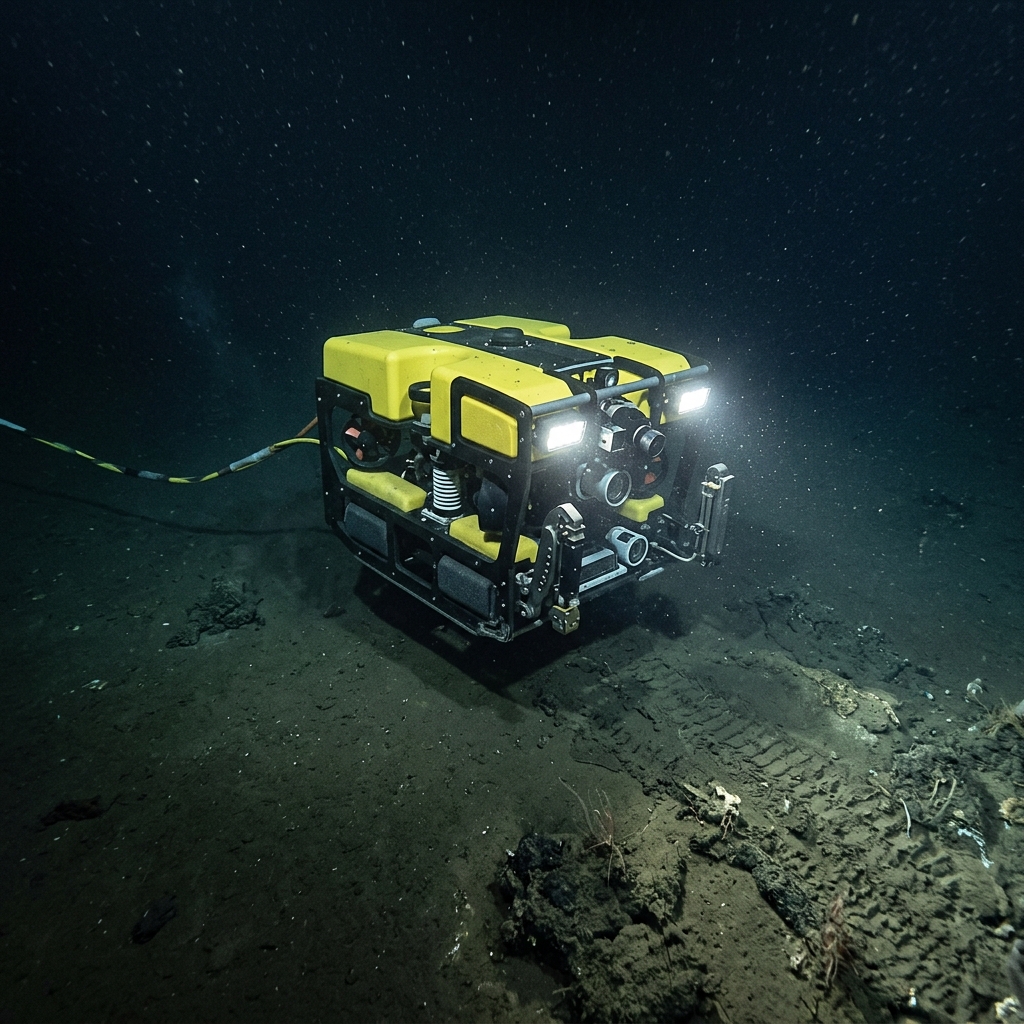
Current research on polymetallic nodule mining indicates that the industry is rapidly transitioning from theoretical exploration to operational feasibility. Recent technological advancements have facilitated the development of sophisticated remotely operated vehicles (ROVs), autonomous underwater vehicles (AUVs), and heavy benthic crawler systems capable of harvesting nodules at depths exceeding 4,000 meters. Furthermore, hydraulic lift systems and riser pipes have been engineered to transport the mined slurry to surface vessels. Despite these engineering triumphs, significant lacunae remain in our ecological knowledge. While pilot extraction tests have been conducted, the cumulative and synergistic impacts of commercial-scale operations remain largely unquantified. The literature reveals a critical gap concerning the far-field effects of sediment plumes and the long-term ecotoxicological impacts of trace metals released into the water column during the mining process (Zhang et al., 2024).
Benthic Ecosystems and Their Importance
Abyssal benthic ecosystems exhibit a remarkably complex structural and functional organization despite their extreme physical conditions. The substrate, heavily influenced by the presence of nodules, provides critical hard-surface habitat for diverse epifaunal communities, including deep-sea sponges, corals, and anemones, which in turn support highly diverse infaunal and microbial assemblages. Ecologically, benthic organisms are foundational to the functioning of the deep sea; microbial communities mediate the carbon and nitrogen cycles, while deposit feeders and scavengers facilitate the decomposition of organic detritus descending from the photic zone. The potential impacts of nodule mining on these ecosystems are profound and multifaceted. The direct removal of nodules eliminates obligate habitats, while the compaction of the seabed by heavy machinery destroys infaunal habitats. Furthermore, the resuspension of sediments threatens to smother benthic pelagic filter feeders, fundamentally disrupting the trophic web (Yool et al., 2017).
Environmental Impact Studies
Historically, environmental impact studies, such as the Disturbance and Recolonization (DISCOL) experiment initiated in the late 1980s, have provided foundational insights into the consequences of simulated deep-sea mining. These studies heavily relied on photographic transects and box coring methodologies to assess immediate disturbance and monitor subsequent recovery. The findings universally indicate that macrofaunal communities suffer dramatic reductions in abundance and diversity immediately following disturbance, with recovery proceeding at an extraordinarily slow pace; decades later, disturbed tracks still show significantly depressed ecological function. However, existing research is limited by spatial constraints and the fact that simulated disturbances do not fully replicate the magnitude and mechanics of modern commercial nodule harvesters. Furthermore, past studies frequently lacked the integration of modern molecular techniques, such as environmental DNA (eDNA), leaving the impact on microbial and elusive meiofaunal communities underexplored (Volz, 2019).
Methodology
Study Design
This research will employ a Before-After Control-Impact (BACI) experimental design, which is recognized as the gold standard for robust environmental impact assessments. The study will be localized within a designated nodule exploration contract area in the Clarion-Clipperton Zone (CCZ), juxtaposed with a strictly comparable un-mined Preservation Reference Zone (PRZ). The temporal timeline is structured over a five-year period, divided into three distinct phases: a one-year pre-mining baseline assessment (Phase I), a closely monitored simulated extraction period spanning six months (Phase II), and a three-and-a-half-year post-disturbance monitoring phase to track immediate recovery trajectories and ongoing secondary impacts (Phase III) (Gollner et al., 2021).
Data Collection
Environmental and biological data collection will utilize a multi-disciplinary suite of advanced oceanographic instrumentation. AUVs equipped with high-resolution multibeam echosounders and high-definition photogrammetry will conduct broad-scale spatial mapping of the benthic topography and epifaunal distribution. To gather localized biological and sedimentological data, ROVs will be deployed to extract precision push cores and deploy benthic landers. Furthermore, environmental DNA (eDNA) metabarcoding will be utilized to comprehensively catalogue biodiversity, capturing both extant organisms and trace genetic material from the surrounding water column and sediment layer. Arrayed sediment traps and acoustic Doppler current profilers (ADCPs) will meticulously measure the spatial extent, concentration, and settling dynamics of the mining-induced sediment plume. Strict calibration protocols and redundant sampling arrays will be instituted to ensure paramount data accuracy and reproducibility ((509322) et al., 2019).
Data Analysis
The quantitative analysis of the collected data will rely on rigorous multivariate statistical frameworks. Differences in community structure between the impact and control sites will be analyzed using Permutational Multivariate Analysis of Variance (PERMANOVA) and visualized via Non-metric Multidimensional Scaling (NMDS). Biodiversity changes will be quantified using standard ecological metrics, including Shannon-Wiener diversity and Pielou's evenness indices. To evaluate the far-field impacts of sediment plumes, hydrodynamic modeling coupled with empirical trap data will be employed to delineate the footprint of physical smothering. The criteria for evaluating environmental changes will be based on statistically significant deviations in biomass, species richness, and structural complexity from the established baseline parameters, with a specific focus on identifying tipping points beyond which ecosystem recovery is irreparably hindered (Cullinan & Thomas, 1992).
Expected Outcomes and Implications
Anticipated Findings
Based on the synthesis of current literature and the stringent BACI methodology, it is anticipated that the study will reveal an acute and highly significant decimation of localized benthic biodiversity within the direct mining footprint. We predict that obligate nodule-dwelling organisms will face localized extirpation, while infaunal populations will be severely depleted due to sediment compaction. Furthermore, the sediment plume is expected to demonstrate a smothering effect on suspension feeders over an area significantly exceeding the physical mining track, potentially causing widespread metabolic stress and mortality. These findings will carry substantial significance for marine biology by providing high-fidelity, quantitative evidence of the vulnerabilities intrinsic to abyssal communities, effectively refuting assumptions of rapid biological resilience in the deep sea (Simon-Lledó et al., 2019).
Implications for Policy and Management
The empirical outcomes of this research will have profound implications for international environmental governance, specifically informing the regulatory frameworks currently being drafted by the International Seabed Authority (ISA). If the anticipated findings hold true, the data will unequivocally support the implementation of stringent, legally binding environmental thresholds, spatial management plans, and the extensive establishment of marine protected areas (MPAs) or Areas of Particular Environmental Interest (APEIs) prior to the issuance of any exploitation contracts. From a management perspective, the study will underscore the necessity of adaptive management strategies and the incorporation of real-time biomonitoring into mining operations. Ultimately, this research will provide policymakers with the objective scientific data required to navigate the precarious balance between extracting economically critical minerals and preserving the ecological integrity of the global ocean commons (Bettencourt & Liang, 2024).
Conclusion
Summary of Research Proposal
This research proposal delineates a comprehensive, methodologically rigorous approach to quantifying the environmental impacts of deep-sea polymetallic nodule mining on vulnerable benthic ecosystems. By establishing clear primary objectives, an exhaustive review of current technological and ecological paradigms, and an advanced multi-tiered BACI research design, this study seeks to elucidate the immediate and chronic ecological consequences of abyssal resource extraction. The potential contributions to the field of marine biology are substantial, offering critical baseline and impact data that are currently lacking in the scientific literature. The necessity for continued, robust research in this domain cannot be overstated, as humanity stands on the precipice of initiating one of the largest environmental interventions in history.
Future Research Directions
While this study focuses on the immediate to mid-term impacts of nodule extraction, it concomitantly illuminates critical avenues for future investigation. Subsequent research must prioritize interdisciplinary approaches, integrating marine ecology with oceanographic physics and resource economics to holistically evaluate the cost-benefit paradigms of deep-sea mining. Furthermore, there is a pressing need to investigate the complex biochemical pathways through which mobilized heavy metals bioaccumulate within deep-sea trophic webs. Most importantly, establishing permanent, long-term ecological observatories within the abyssal plains will be essential for monitoring multi-decadal recovery processes and understanding how deep-sea mining stressors synergize with broader global phenomena, such as ocean acidification and climate change.
References
(509322), K., (6955571), C., (346926), J., (6955574), K., (1922449), R., (346924), S., (346928), D., (346922), B., (1922458), W., (1885003), Y., (1673089), J., (6955577), B., (6955580), B., (6955583), B., (3091356), K., (6955586), F., & (1922461), C. (2019). Data_Sheet_1.pdf. Figshare. https://doi.org/10.3389/fmars.2019.00373.s001
Bettencourt, J. H., & Liang, C. C. A. (2024). Defining Strategic Environmental Goals and Objectives for the Management of Deep-sea Mining Operations in the Seabed Beyond National Jurisdiction. Journal of Science Policy & Governance, 24(01). https://doi.org/10.38126/jspg240102
Cullinan, V. I., & Thomas, J. M. (1992). A comparison of quantitative methods for examining landscape pattern and scale. Landscape Ecology, 7(3), 211–227. https://doi.org/10.1007/bf00133311
Gollner, S., Haeckel, M., Janssen, F., Lefaible, N., Molari, M., Papadopoulou, S., Reichart, G., Trabucho Alexandre, J., Vink, A., & Vanreusel, A. (2021). Restoration experiments in polymetallic nodule areas. Integrated Environmental Assessment and Management, 18(3), 682–696. https://doi.org/10.1002/ieam.4541
Hyman, J., Dunstan, P., Clark, M., Connolly, R., Fulton, E., Hosack, G., Leduc, D., O’Hara, T., Parr, J., Rowden, A., Sahin, O., Schlacher, T., Stewart, R., Woolley, S., & Dambacher, J. (2025). Integrated assessment identifies pathways for effects of deep-sea nodule mining across ocean and seafloor ecosystems. In Research Square. Research Square. https://doi.org/10.21203/rs.3.rs-6631838/v1
Lins, L., Zeppilli, D., Menot, L., Michel, L. N., Bonifácio, P., Brandt, M., Pape, E., Rossel, S., Uhlenkott, K., Macheriotou, L., Bezerra, T. N., Sánchez, N., Alfaro‐Lucas, J. M., Martínez Arbizu, P., Kaiser, S., Murakami, C., & Vanreusel, A. (2021). Toward a reliable assessment of potential ecological impacts of deep‐sea polymetallic nodule mining on abyssal infauna. Limnology and Oceanography: Methods, 19(9), 626–650. https://doi.org/10.1002/lom3.10448
Simon-Lledó, E., Bett, B. J., Huvenne, V. A. I., Köser, K., Schoening, T., Greinert, J., & Jones, D. O. B. (2019). Biological effects 26 years after simulated deep-sea mining. Scientific Reports, 9(1), 8040. https://doi.org/10.1038/s41598-019-44492-w
Volz, J. (2019). Volz et al_BG_final responses_referee#2. https://doi.org/10.5194/bg-2019-316-ac2
Yool, A., Martin, A. P., Anderson, T. R., Bett, B. J., Jones, D. O. B., & Ruhl, H. A. (2017). Big in the benthos: Future change of seafloor community biomass in a global, body size-resolved model. Global Change Biology, 23(9), 3554–3566. https://doi.org/10.1111/gcb.13680
Zhang, X., Zuo, Y., Wei, J., Sha, F., Yuan, Z., Liu, X., Xi, M., & Xu, J. (2024). A Review on Underwater Collection and Transportation Equipment of Polymetallic Nodules in Deep-Sea Mining. Journal of Marine Science and Engineering, 12(5), 788. https://doi.org/10.3390/jmse12050788
0 Comments