
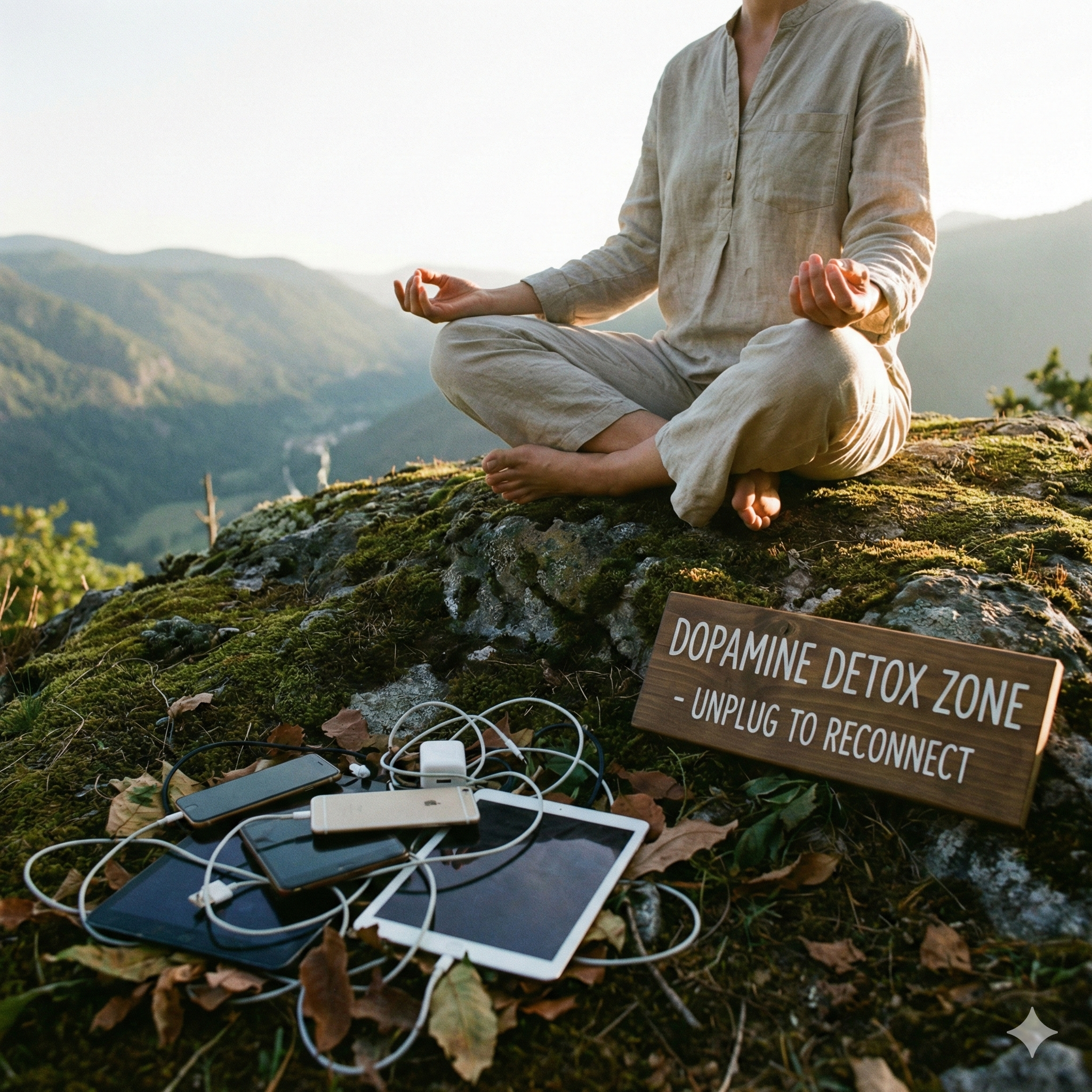
The State of Attention in 2026: A Cognitive Crisis
By the time we arrived in 2026, the digital landscape had ceased to be merely a layer of our reality; it had become the primary interface through which human existence is mediated. The warnings issued in the early 2020s regarding the “attention economy” and “surveillance capitalism” have metastasized into a pervasive societal condition often colloquially referred to as “brain rot”—a term so culturally significant that Oxford University Press highlighted it as a defining concept as early as 2024.1 This phenomenon is not merely a pejorative slang term for consuming low-quality content; it represents a measurable physiological and psychological deterioration of cognitive function resulting from the chronic overconsumption of trivial, algorithmically optimized digital material.1
The statistical reality of our current cognitive environment is stark and alarming. Research tracking attention spans from 2004 to 2024 reveals a catastrophic decline in our ability to maintain focus. In 2004, the average duration of attention on a single screen was approximately 2.5 minutes (150 seconds). By 2012, this had dropped to 75 seconds. By 2024/2025, rigorous logging techniques determined that the average adult internet user’s attention span on a screen had plummeted to a mere 47 seconds.3 To put this in a humbling biological perspective, the commonly cited (though scientifically debated) attention span of a goldfish is approximately 9 seconds; human digital attention is rapidly converging on a single-digit timeline.3
This fragmentation of focus is not an accident of evolution but the result of deliberate engineering. In 2026, we are navigating an ecosystem where generative AI has supercharged the “engagement algorithms” of the past. Platforms no longer just guess what might keep a user scrolling; they use predictive modeling to generate or curate content that mathematically maximizes the likelihood of a dopaminergic response. The result is a dual-effect on well-being: while AI offers productivity support, its integration into entertainment feeds creates an environment of algorithmic control, uncertainty, and cognitive overload.5
The impact of this shift is visible in the skyrocketing rates of digital burnout. Burnout, originally a term reserved for occupational exhaustion, has now expanded to include “Digital Burnout”—a distinct form of psychological exhaustion triggered by the pervasive integration of technology into every waking moment.5 Symptoms include emotional detachment, depersonalization, and a profound sense of “brain fog.” The relentless “dopamine-driven feedback loops” inherent in modern digital media exacerbate these effects, leading to a state where the brain is constantly stimulated yet paradoxically bored and unfulfilled.1
In this context, the “Dopamine Detox” movement has resurged, transforming from a niche Silicon Valley productivity hack into a necessary survival strategy for the modern mind. It is no longer just about “getting more work done”; it is about reclaiming the fundamental human capacity for agency, deep thought, and emotional regulation.7 This report provides an exhaustive, evidence-based analysis of the Dopamine Detox movement as it stands in 2026, dismantling the pseudoscience, exploring the rigorous Cognitive Behavioral Therapy (CBT) underpinnings established by Dr. Cameron Sepah, and providing a comprehensive protocol for reclaiming cognitive autonomy.
The Metrics of Distraction: A 20-Year Retrospective
To understand the urgency of the Dopamine Detox, we must examine the trajectory of human attention over the last two decades. The data suggests a systemic collapse in our ability to perform “Deep Work” or engage in sustained contemplation.
| Year | Average Screen Attention Span | Key Technological Drivers |
| 2004 | 150 seconds (2.5 mins) | Early broadband, desktop-centric internet, limited social media. |
| 2012 | 75 seconds | Rise of smartphones, notification culture, early algorithmic feeds. |
| 2018 | ~50 seconds | Stories format, short-form video (early TikTok), infinite scroll ubiquity. |
| 2024/25 | 47 seconds | Generative AI content, “Brain Rot” scrolling, hyper-personalized algorithms.3 |
| 2026 | <45 seconds (Projected) | Immersive AR/VR overlays, biometric feedback loops in media consumption. |
The implications of this decline are profound. It takes the average human brain approximately 25 minutes to fully regain focus after a digital interruption.3 If the average user is switching tasks or checking notifications every 47 seconds, they are perpetually in a state of “continuous partial attention,” never reaching the state of cognitive flow required for complex problem-solving or deep emotional processing. This creates a “switch cost”—a tax on cognitive energy that leaves individuals feeling exhausted by midday despite having accomplished little of substance.6
Furthermore, the impact is disproportionately affecting the younger generation. In 2025, 45% of teenagers reported spending “too much time” on social media, a significant jump from previous years.2 This generation is being socialized in a digital environment where “Doomscrolling” and “Zombie Scrolling”—passive, meaningless consumption—are the default states of being.1 The Dopamine Detox, therefore, is not merely a self-improvement trend; it is a critical intervention for the preservation of mental health in a hyper-digital age.
The Neuroscience of Desire: Demystifying Dopamine
To effectively implement a Dopamine Detox, one must first strip away the pop-psychology myths surrounding the neurotransmitter itself. There is a pervasive misunderstanding in popular culture that dopamine is solely a “pleasure molecule” and that a “detox” involves purging this chemical from the brain to reach a state of zen-like tranquility. This is scientifically inaccurate and biologically impossible.
Dopamine is Not Just Pleasure; It is Prediction
Dopamine is a fundamental neurotransmitter produced in the midbrain (specifically the Ventral Tegmental Area or VTA) and is involved in motor control, motivation, arousal, and reinforcement learning. Without dopamine, we would not just be “bored”; we would be catatonic, unable to initiate movement or pursue the basic necessities of life like food or shelter.7
The primary function of dopamine in the context of behavior is Reward Prediction Error (RPE). Theoretical models and experimental neuroscience have confirmed that dopamine neurons signal the difference between the expected reward and the actual reward received.9
- Positive RPE: If an action produces a result that is better than expected (e.g., you open a social media app expecting nothing, but find a viral video that makes you laugh), dopamine neurons fire in a rapid, high-amplitude “phasic” burst. This burst serves as a “teaching signal” to the brain, effectively saying: “That was unexpected and valuable. Remember this context and repeat this action.”.10
- Negative RPE: If an action produces a result worse than expected (e.g., you refresh your feed and see no new notifications), dopamine firing pauses. This dip is perceived as a negative feeling, driving the urge to try again to correct the error.10
This mechanism is evolutionary brilliance. It helped our ancestors learn where to find the ripest fruit or the best hunting grounds. However, in 2026, this system is being hijacked by “Supernormal Stimuli.”
The Trap of Supernormal Stimuli and Downregulation
In the natural world, high-dopamine rewards are scarce and require effort (e.g., hunting, gathering, mating). In the digital world, rewards are engineered to be effortless and infinite. This creates a discrepancy that the brain struggles to manage.
When the brain is bombarded with high-intensity, “phasic” dopamine spikes from sources like video games, pornography, or sugary foods, it attempts to maintain homeostasis (balance). The brain protects itself from overstimulation by downregulating dopamine receptors (specifically D2 receptors). It effectively “turns down the volume” on the signal.7
This leads to two devastating consequences:
- Tolerance: The individual now requires more of the stimulus just to feel “normal” or to achieve the same level of satisfaction.
- Anhedonia: Because the baseline sensitivity to dopamine has been lowered, low-stimulation activities (tonic dopamine release)—such as reading a book, talking to a friend, or working on a spreadsheet—become physically painful or impossibly boring. They simply do not generate enough signal to register on the down-regulated receptors.7
This is the state of Dopamine Dysregulation. The individual is not addicted to the pleasure of the activity (which often diminishes over time); they are enslaved by the craving driven by the memory of the reward and the need to escape the discomfort of the dopamine deficit.12
The Role of “Variable Ratio Reinforcement”
Digital platforms exploit RPE through Variable Ratio Reinforcement Schedules. This is the same psychological mechanism used in slot machines. If you won every time you pulled the lever, you would quickly get bored. If you never won, you would quit. But if you win unpredictably—sometimes a little, sometimes a lot, sometimes nothing—dopamine remains constantly elevated in anticipation of the reward.
Social media feeds are the ultimate variable ratio machines. The “pull-to-refresh” mechanism is functionally identical to the slot machine lever. The uncertainty of what comes next (A news tragedy? A cute cat? A message from a crush?) creates a perpetual state of “seeking,” keeping the dopaminergic pathways firing and making it nearly impossible to disengage voluntarily.6
Deconstructing the Movement: Fact vs. Fiction
The term “Dopamine Detox” (or Dopamine Fasting) has become a catch-all phrase in the wellness industry, often leading to scientific inaccuracy. To reclaim focus effectively, we must define what the practice actually entails, distinguishing the rigorous CBT protocol from the “Silicon Valley Fad.”
The Origin: Dr. Cameron Sepah and CBT
The modern iteration of the Dopamine Detox was popularized in 2019 by Dr. Cameron Sepah, a California-based psychiatrist. Dr. Sepah explicitly stated that the term “Dopamine Fasting” was a metaphor and not to be taken literally.12 His protocol, “Dopamine Fasting 2.0,” is based on Cognitive Behavioral Therapy (CBT), specifically utilizing two core techniques:
- Stimulus Control: This involves removing the environmental cues that trigger impulsive behavior. If the phone is the trigger for doomscrolling, Stimulus Control involves physically removing the phone from the room.16
- Exposure and Response Prevention (ERP): This involves exposing oneself to the internal sensation of the urge (the craving/boredom) but preventing the habitual response (checking the phone). By sitting with the discomfort without acting on it, the brain eventually learns that the urge is not an emergency and the conditioning is weakened.13
The Myth of “Reseting” Dopamine Levels
A common critique from the scientific community is that you cannot “empty” your brain of dopamine, nor would you want to.18 Critics argue that the name implies a physiological “detox” similar to dialysis, which is misleading. Dr. Sepah and proponents acknowledge this, clarifying that the goal is not to reduce the neurotransmitter itself, but to reduce impulsive behaviors that have been reinforced by dopaminergic pathways.13
The objective is Behavioral Flexibility. An addicted brain is rigid; it responds automatically to stimuli. A “detoxed” brain is flexible; it can feel an urge and choose whether or not to act on it. This restoration of choice is the true “reset”.12
Why the Name Persists
Despite the scientific inexactitude, the term “Dopamine Detox” remains powerful because it accurately describes the subjective experience of the user. When a person accustomed to constant stimulation suddenly stops, they feel a withdrawal-like “crash”—a lack of motivation and energy—which feels like a physical detox. Furthermore, the concept aligns with the “unmeasured wellness” trend of 2026, where individuals are seeking to escape the quantification of their lives and return to a more analog, natural state of being.20
The Six Pillars of Impulsive Behavior
Dr. Sepah’s framework identifies six specific categories of behavior that are most prone to becoming “sticky” or addictive due to their high-dopamine reinforcement loops. In the hyper-digital landscape of 2026, these categories have evolved but remain the primary targets for any effective detox protocol. Addressing these requires honesty and a willingness to confront uncomfortable habits.
1. Emotional Eating
This category focuses on the consumption of ultra-processed foods, which are engineered to hijack the brain’s reward system.
- The Mechanism: Food scientists utilize the “bliss point”—a specific, mathematically calculated ratio of sugar, salt, and fat—that maximizes sensory reward while suppressing the body’s natural satiety signals.13 These foods trigger a dopaminergic response in the striatum that rivals that of some recreational drugs. In 2026, with the prevalence of app-based delivery services, the friction between “craving” and “consumption” has been eliminated, making emotional eating a primary coping mechanism for digital burnout.13
- Detox Strategy: The goal is not starvation but the restriction of hedonic foods. The protocol involves abstaining from processed snacks, sugary drinks, and high-glycemic foods, reverting to whole, nutrient-dense foods that provide satiety without the “high”.21
2. Internet and Gaming
This is the most pervasive category in the 2026 context. “Internet” here refers to non-utilitarian use: scrolling, browsing, and passive consumption.
- The Mechanism: As discussed, this relies on Variable Ratio Reinforcement. The “Gamification” of everyday life—from learning apps to fitness trackers—has conditioned the brain to expect constant digital rewards. Video games, particularly those with “Loot Box” mechanics or “Battle Pass” progression systems, are explicitly designed to create a compulsion loop.14 The rise of “Brain Rot” content—short, nonsensical, high-stimulation clips—has optimized this loop to shorten the reward cycle to seconds.1
- Detox Strategy: Complete abstinence from recreational screen time. Work-related technology use is permitted if essential, but rigorous boundaries must be set. This includes a ban on “second screening” (watching TV while scrolling) and “doomscrolling” news feeds.22
3. Gambling and Shopping
The digitization of commerce has made spending money a frictionless, high-dopamine activity.
- The Mechanism: The “Thrill of the Hunt” (browsing/shopping) often releases more dopamine than the actual acquisition of the item. The anticipation of the delivery keeps dopamine elevated for days. With the integration of crypto-gambling and sports betting apps into mainstream media, the barrier to entry for gambling has vanished.13
- Detox Strategy: A strict freeze on all non-essential purchasing. Uninstalling shopping and betting apps. The practice here is to break the association between “stress” and “purchase”.21
4. Pornography and Masturbation
This category addresses the desensitization of the sexual reward system caused by supernormal digital stimuli.
- The Mechanism: High-speed internet pornography provides infinite novelty, exploiting the Coolidge Effect—a biological phenomenon where sexual interest is renewed by the presence of a new partner. This constant novelty can lead to sexual dysfunction in real-world relationships and a “flattening” of romantic emotions.23
- Detox Strategy: Abstinence from pornographic material and compulsive masturbation. The goal is to reset sexual conditioning so that arousal is linked to intimacy and real-world connection rather than pixels and novelty.21
5. Thrill and Novelty Seeking
This includes behaviors driven by the need for an adrenaline rush or intense novelty, which can manifest as high-risk sports, binge-watching thriller series, or constantly seeking “new” experiences to escape boredom.
- The Mechanism: These activities provide intense phasic dopamine spikes that can make ordinary life feel unbearably dull by comparison. The constant pursuit of the “new” prevents the individual from finding contentment in stability or mastery.13
- Detox Strategy: Engaging in low-stimulation, familiar, and repetitive activities. Allowing oneself to be bored and finding “micro-joys” in the mundane.13
6. Recreational Drugs
This includes not only illicit substances but also socially normalized stimulants like high doses of caffeine and alcohol.
- The Mechanism: Recreational drugs are chemical shortcuts that bypass the brain’s natural reward circuitry. They force the release of dopamine or block its reuptake, causing the most direct and damaging downregulation of receptors. Continued use makes the brain physically incapable of experiencing pleasure from natural rewards.21
- Detox Strategy: Complete abstinence during the detox period. (Note: For individuals with chemical dependency, this should only be done under medical supervision).13
The Comprehensive Detox Protocol: A Blueprint for 2026
A Dopamine Detox is not a punishment; it is a recalibration. To be effective, it requires structure. The following protocol integrates Dr. Sepah’s original guidelines with 2026 wellness trends emphasizing “intentional rest” and digital minimalism.
Phase 1: The “Pre-Tox” (Environmental Engineering)
Willpower is a finite resource and arguably a myth when pitted against supercomputers designed to steal your attention. Success depends on engineering your environment before the detox begins.
- The Digital Declutter: Delete high-dopamine apps (social media, games, news) from your phone. If you cannot delete them, move them to the last page of a folder and turn off all notifications.25
- Grayscale Mode: Switch your phone and computer displays to grayscale. The vibrant red notification badges are designed to trigger visual orienting reflexes. Removing color makes the device significantly less stimulating and “boring” to look at.25
- The “Kitchen Safe”: Invest in a time-locking container. During the detox, physical separation from the device is crucial. “Out of sight, out of mind” is a neurologically valid strategy.16
- Inform Your Circle: Tell close friends and family you will be offline. This reduces the “fear of missing out” (FOMO) and the social anxiety of unanswered messages.
Phase 2: Choosing Your Tier
One size does not fit all. Dr. Sepah emphasizes customizing the detox to individual needs.24
Tier 1: The 24-Hour “Hard Reset” (Beginner)
Recommended for those suffering from acute burnout or “brain fog” who have never attempted a disconnect.
- Timing: Ideally a Sunday or a non-work day.
- Rules:
- No screens (phone, PC, TV).
- No music with lyrics (instrumental/ambient is permitted but silence is preferred).
- No highly processed foods.
- No intense exercise (gentle walking/stretching only).
- The Schedule:
- 07:00: Wake up naturally (no alarm). Hydrate with water (no caffeine).
- 08:00: 30-minute walk outside. Exposure to sunlight sets the circadian rhythm and boosts serotonin naturally.
- 09:00: “Brain Dump” Journaling. Write down every worry or task on your mind to offload cognitive load.26
- 12:00: Prepare a simple, whole-food lunch from scratch. The act of cooking is a mindfulness practice.26
- 14:00: Deep Rest (Nap or Non-Sleep Deep Rest/NSDR).
- 16:00: Reading a physical book (fiction or philosophy, avoid work-related non-fiction).
- 19:00: Reflection journaling. Note the urges you felt.
- 21:00: Bedtime.
Tier 2: The 48-Hour “Deep Dive” (Intermediate)
- Timing: The full weekend.
- Focus: Breaking deep-seated conditioning. The second day is often harder than the first, as the novelty of the “challenge” wears off and genuine boredom sets in.
- Added Restriction: Limited conversation (Noble Silence). This reduces the dopamine hit of social validation and forces introspection.27
Tier 3: Lifestyle Integration (Advanced/Maintenance)
A detox is useless if you binge immediately after. The goal is sustainable “Intermittent Dopamine Fasting.”
- Daily: 1-4 hours of “no-tech” time before bed.
- Weekly: One 24-hour offline day (e.g., “Offline Saturdays”).
- Quarterly: A “Detox Weekend” to reset baseline sensitivity.16
Phase 3: The Practice of “Surfing the Urge”
During the detox, you will feel uncomfortable. You will instinctively reach for your phone. This is the critical moment of Exposure and Response Prevention (ERP).
- Notice: “I am feeling the urge to check Instagram.”
- Label: “This is just a chemical craving. It is not a need.”
- Observe: Where do you feel the urge in your body? Is your chest tight? Are your hands restless?
- Surf: Imagine the urge as a wave. It will rise, crest, and eventually crash. You do not need to drown in it; you just need to ride it out for 90 seconds.
- Act: Once the wave subsides, return to your low-dopamine activity.13
Navigating the Void: Withdrawal, Boredom, and the Rebound Effect
The most dangerous phase of a Dopamine Detox is the immediate aftermath. Understanding the psychology of the “Void” is essential to preventing relapse.
The Rebound Effect
Critics and researchers warn of a “Rebound Effect,” where restrictive behavior leads to bingeing once the restriction is lifted.28 If a person white-knuckles through a 24-hour fast only to spend the next day scrolling TikTok for 10 hours, the detox has arguably done more harm than good by reinforcing a cycle of “binge and purge.”
- Mitigation Strategy: The “Re-entry” must be slow. Do not immediately open high-stimulation apps. Start with utilitarian digital tasks (checking calendar, maps) before reintroducing entertainment. Set strict time limits for the days following the detox.30
The Necessity of Boredom
In 2026, boredom is a luxury good. It is the state in which the brain’s Default Mode Network (DMN) becomes active. The DMN is responsible for autobiographical memory, envisioning the future, and understanding the perspectives of others. When we constantly suppress boredom with scrolling, we suppress the DMN.31
The discomfort felt during a detox is the brain physically restructuring its expectations. It is the “pain of regeneration.” When boredom strikes, the advice is counter-intuitive: Do nothing. Do not seek a “healthy” distraction immediately. Sit with the boredom for at least 15 minutes. It is often on the other side of this boredom barrier that creative insights and solutions to complex problems are found.31
Managing Withdrawal Symptoms
Common symptoms during a detox include:
- Phantom Vibration Syndrome: Feeling the phone buzz when it isn’t there.
- Irritability and Anxiety: Caused by the sudden drop in dopamine and the brain’s “panic” at the lack of stimulation.28
- Lethargy: Feeling incredibly tired despite having done nothing. This is the brain entering energy-conservation mode in the absence of high-arousal stimuli.
- Solution: Gentle movement (walking) and cold exposure (cold showers) can increase norepinephrine and dopamine naturally, alleviating these symptoms without reinforcing the addictive loop.7
The Analog Renaissance: Replacement Strategies
A common failure mode is “void-based” fasting—simply staring at a wall. Successful detoxes rely on Replacement Behaviors that are low-dopamine but high-fulfillment (High-Value Low-Stimulation). These activities engage the brain’s reward system differently, often utilizing serotonin (satisfaction) and oxytocin (connection) rather than just dopamine.25
| Category | Recommended Activities | Neurobiological Benefit |
| Movement | Hiking, Yoga, Walking, Stretching 26 | Regulates cortisol (stress hormone) and releases endorphins. Walking provides “optic flow,” which quiets the amygdala. |
| Flow | Knitting, Sketching, Instrument practice, Puzzles 32 | Induces “Flow State,” a state of deep absorption that is inherently rewarding but not spike-driven. |
| Maintenance | Cleaning, Repairs, Organization, Gardening 26 | Provides tangible, visible progress. “Effort-based rewards” rebuild the dopamine-action connection. |
| Connection | Board games, Face-to-face conversation, Cuddling | Triggers oxytocin release, which counteracts the isolation often felt during digital withdrawal. |
| Stillness | Meditation, Journaling, Napping 26 | Allows the glymphatic system to clear metabolic waste from the brain (neuro-cleansing). |
The Power of “Effortful Fun”
The key distinction in replacement activities is Effort. Passive fun (Netflix) is high-dopamine/low-effort. Active fun (playing guitar) is moderate-dopamine/high-effort. By forcing the brain to work for its reward, you re-sensitize the dopamine receptors to value the process, not just the outcome. This is the essence of rebuilding a healthy attention span.34
The Digital Toolkit for Analog Living
In an ironic twist, the tech industry of 2026 offers sophisticated tools to enforce digital boundaries. These tools act as “external pre-frontal cortices,” providing the discipline that the exhausted brain lacks.
App-Based Interventions (Software)
- Opal: A dominant app in 2026, Opal creates “Deep Focus” sessions by blocking apps at the network level (VPN). It is difficult to bypass, offering “Hard Mode” which prevents the user from canceling the block.35
- One Sec: This app introduces “Micro-Friction.” When you tap a target app (e.g., Instagram), One Sec forces a 3-10 second delay, asking you to take a deep breath. This pause breaks the automaticity of the loop, allowing the prefrontal cortex to come online and ask, “Do I really want to do this?”.35
- Forest: Gamifies focus. You plant a virtual tree that grows while you focus. If you leave the app, the tree dies. This utilizes the human loss-aversion bias to protect focus time.35
Hardware Interventions
- The “Dumb Phone” Movement: Devices like the Light Phone III or Punkt phones have gained market share in 2026. These devices offer tethering, maps, and calls, but no browser or social media. Many executives and creatives now use these as “Weekend Phones”.20
- E-Ink Tablets: Devices like Remarkable or Boox allow for digital productivity (writing, reading) without the distraction of a colorful, notification-rich OLED screen. The slow refresh rate of E-Ink is naturally low-dopamine.
Future Horizons: Wellness in 2026 and Beyond
As we look toward the latter half of the decade, the Dopamine Detox is shifting from a fringe biohack to a standard recommendation for mental hygiene, influencing everything from corporate policy to travel trends.
Emerging Trends in Digital Wellbeing
- Somatic and Body-Based Healing: The focus is moving from “thinking” about addiction to “feeling” where the urge lives in the body. Detox retreats now incorporate somatic shaking, trauma-release exercises, and breathwork to process the stress of withdrawal stored in the nervous system.27
- Unmeasured Wellness: A backlash against the “Quantified Self” is emerging. People are engaging in detoxes where they also remove smartwatches and fitness trackers (Whoop, Oura, Apple Watch). The constant feedback of “Sleep Scores” and “Readiness Scores” is seen as another form of dopaminergic loop. The goal is to learn to listen to the body’s internal signals rather than an algorithm’s interpretation of them.20
- Corporate “Right to Disconnect”: Companies are increasingly instituting “Summer Flex Fridays” and mandated email-free hours. The economic cost of employee burnout has forced corporations to recognize that “always-on” culture is a liability. Some firms are now measuring “Headspace” as a KPI.38
The Socio-Economic Divide of Focus
It is critical to acknowledge that the ability to “disconnect” is becoming a status symbol. “Digital Detox Retreats” at luxury locations like The Ranch in Malibu or Kamalaya in Thailand cater to the wealthy, costing thousands of dollars for the privilege of having one’s phone confiscated.27 Meanwhile, gig-economy workers and those in lower-income brackets are often tethered to algorithms for their livelihood (Uber, DoorDash, Upwork) and cannot afford the luxury of going offline. Reclaiming focus is not just a biological challenge; it is rapidly becoming a question of economic privilege and digital equity.
Conclusion: The Autonomy of Attention
The Dopamine Detox, stripped of its marketing buzzwords and scientific inaccuracies, is fundamentally a practice of reclaiming agency. It is a declaration that human attention is a finite, precious resource that should be invested intentionally, not strip-mined by engagement algorithms for advertising revenue.
We cannot—and should not—eliminate dopamine from our biology. It is the fuel of motivation and the spark of learning. However, we can refuse to be puppets in a “Skinner Box” digital world. By implementing the strategies of Stimulus Control, Exposure Response Prevention, and intentional analog living, we can reset our baseline. We can retrain our brains to find satisfaction in the slow, the difficult, and the meaningful.
In a hyper-digital age, the ultimate rebellion is not to smash the machine, but to master the ability to turn it off.
Key Takeaways for the Reader
- Dopamine is Prediction, Not Just Pleasure: Understand that you are fighting a “Reward Prediction Error” system, not just a pleasure seeking impulse.
- It’s Not About the Chemicals: The goal is Behavioral Flexibility, not lowering a neurotransmitter level.
- Start Small, But Strict: A 24-hour complete reset is more effective than a week of “trying to use less.”
- Embrace the Void: Boredom is the symptom of the brain healing and restructuring. Do not run from it.
- Replace, Don’t Just Remove: You must fill the space left by digital noise with high-quality, effort-based analog activities.
- Environment is Everything: You cannot willpower your way out of an addiction; you must engineer your surroundings to make the addiction impossible.
Works cited
- Demystifying the New Dilemma of Brain Rot in the Digital Era: A Review – NIH, accessed February 2, 2026, https://pmc.ncbi.nlm.nih.gov/articles/PMC11939997/
- From doomscrolling to burnout: Digital crisis demands real accountability – Daily Sabah, accessed February 2, 2026, https://www.dailysabah.com/opinion/op-ed/from-doomscrolling-to-burnout-digital-crisis-demands-real-accountability
- BEST USER ATTENTION SPAN STATISTICS 2025 – Amra & Elma, accessed February 2, 2026, https://www.amraandelma.com/user-attention-span-statistics/
- Speaking of Psychology: Why our attention spans are shrinking, with Gloria Mark, PhD, accessed February 2, 2026, https://www.apa.org/news/podcasts/speaking-of-psychology/attention-spans
- Development and validation of a digital burnout scale in artificial intelligence era – Frontiers, accessed February 2, 2026, https://www.frontiersin.org/journals/psychology/articles/10.3389/fpsyg.2025.1580422/full
- Digital Detox: Reclaiming Your Mental Health from Social Media, accessed February 2, 2026, https://apogeebehavioralmedicine.com/blog/digital-detox-reclaiming-your-mental-health-from-social-media/
- Is Dopamine Detoxing Actually Backed by Science? – News-Medical, accessed February 2, 2026, https://www.news-medical.net/health/Is-Dopamine-Detoxing-Actually-Backed-by-Science.aspx
- What is a dopamine detox, and how does it help ADHD? – Inflow, accessed February 2, 2026, https://www.getinflow.io/post/a-dopamine-detox-can-cure-adhd-fact-or-fiction
- Impaired Neural Response to Negative Prediction Errors in Cocaine Addiction, accessed February 2, 2026, https://www.jneurosci.org/content/35/5/1872
- Dopamine prediction errors in reward learning and addiction: from theory to neural circuitry – PMC – PubMed Central, accessed February 2, 2026, https://pmc.ncbi.nlm.nih.gov/articles/PMC4760620/
- Dopamine fasting: Does it work? | Ohio State Health & Discovery, accessed February 2, 2026, https://health.osu.edu/health/mental-health/does-dopamine-fasting-work
- Dopamine Detox: Does it Work? – Psych Central, accessed February 2, 2026, https://psychcentral.com/blog/dopamine-fasting-probably-doesnt-work-try-this-instead
- Dopamine fasting (Dr. Cameron Sepah) from NeuroQuotient®, accessed February 2, 2026, https://neuroquotient.com/en/dopamine-fasting-technique-seen-from-neuroquotient/
- Dopamine Detox Guide: Reset Your Brain’s Reward System – Cedar Oaks Wellness Center, accessed February 2, 2026, https://cedaroakswellness.com/dopamine-detox/
- Can a Dopamine Detox Improve Your Mental Health? – Recovery.com, accessed February 2, 2026, https://recovery.com/resources/dopamine-detox/
- Dopamine Fasting: Your Kickstart Guide to Proven Success – Healing Arts Institute, accessed February 2, 2026, https://healingartssfl.org/dopamine-fasting-your-kick-start-guide-to-proven-success/
- Dopamine Detoxes Don’t Work: Here’s What To Do Instead, accessed February 2, 2026, https://health.clevelandclinic.org/dopamine-detox
- News: Debunking the Dopamine Detox Trend (The Scientist) – Behind the headlines – NCBI, accessed February 2, 2026, https://www.ncbi.nlm.nih.gov/search/research-news/20268
- Debunking the Dopamine Detox Trend – The Scientist, accessed February 2, 2026, https://www.the-scientist.com/debunking-the-dopamine-detox-trend-72036
- Health & Wellness Predictions for 2026 – DEXA Scan, accessed February 2, 2026, https://dexascan.com/blogs/news/health-wellness-predictions-for-2026
- Dopamine detox: How does it work? – Medical News Today, accessed February 2, 2026, https://www.medicalnewstoday.com/articles/dopamine-detox
- Dopamine fasting – Wikipedia, accessed February 2, 2026, https://en.wikipedia.org/wiki/Dopamine_fasting
- Dopamine Fasting to “Reset” Your Brain: Pros, Cons & Results | Psychology Today, accessed February 2, 2026, https://www.psychologytoday.com/us/blog/the-fallible-mind/202008/dopamine-fasting-reset-your-brain-pros-cons-results
- Dopamine Detox: Benefits, Effectiveness, & How to Begin – Choosing Therapy, accessed February 2, 2026, https://www.choosingtherapy.com/dopamine-detox/
- Dopamine Detox: What It Is and How to Try It – Thriveworks, accessed February 2, 2026, https://thriveworks.com/help-with/self-care/dopamine-detox/
- 19 Easy & Rewarding Behaviors You Can Do Instead of Doom Scrolling | by Marek Veneny, accessed February 2, 2026, https://medium.com/publishous/19-easy-rewarding-behaviors-you-can-do-instead-of-doom-scrolling-a37aa00e5df6
- 2026 Wellbeing Trends: Shaping Health and Wellness – Venbrook Insurance Services, accessed February 2, 2026, https://venbrook.com/banc-of-california/your-wellbeing/2026-wellbeing-trends-shaping-health-and-wellness
- Exploring the Depths: Unveiling the Reality of Dopamine Detox Side Effects – Opal, accessed February 2, 2026, https://www.opal.so/blog/dopamine-detox-side-effects
- Dopamine fasting: Definition, doing it safely, and potential benefits – Medical News Today, accessed February 2, 2026, https://www.medicalnewstoday.com/articles/dopamine-fasting
- Guide to Dopamine Detox | Blog – TalktoAngel, accessed February 2, 2026, https://www.talktoangel.com/blog/guide-to-dopamine-detox
- It’s time to change your relationship with dopamine | BBC Science Focus Magazine, accessed February 2, 2026, https://www.sciencefocus.com/science/dopamine-detox-focus-mood
- I want to stop doomscrolling and relying on my phone so much for dopamine. What are some non-screen activities that still give you enough dopamine but are also easy/chill enough to not add to your burnout? : r/ADHD – Reddit, accessed February 2, 2026, https://www.reddit.com/r/ADHD/comments/148o4rv/i_want_to_stop_doomscrolling_and_relying_on_my/
- 76 Creative, Mindful Activities To Do Instead Of Doomscrolling On Instagram, accessed February 2, 2026, https://jessalittlecreative.com/blogs/news/76-creative-mindful-activities-to-do-instead-of-doomscrolling-on-instagram
- What are some alternatives to mindlessly scrolling through social media? – Reddit, accessed February 2, 2026, https://www.reddit.com/r/productivity/comments/vjkwt5/what_are_some_alternatives_to_mindlessly/
- 7 Best Apps to Reduce Phone Addiction in 2025 (Free & Paid) – We Are Founders, accessed February 2, 2026, https://www.wearefounders.uk/best-apps-to-reduce-phone-addiction-take-back-control-of-your-screen-time/
- 5 Digital Detox Tools and Apps You Can Use Today – LifeStance Health, accessed February 2, 2026, https://lifestance.com/blog/5-digital-detox-tools-and-apps-you-can-use-today/
- The Best Digital Detox Apps For Your Phone – CMARIX, accessed February 2, 2026, https://www.cmarix.com/blog/best-digital-detox-apps/
- 5 Strategies for Leveraging Digital Detox Trends to Engage Mental Health-Conscious Audiences | Integrated Media Group, accessed February 2, 2026, https://www.growwithimg.com/5-strategies-for-leveraging-digital-detox-trends-2024/
- 8 Mental Health Trends for 2026 and What They Mean for Your Workplace, accessed February 2, 2026, https://www.springhealth.com/blog/2026-mental-health-trends-for-your-workplace
0 Komentar